Bay Area Gas Water Heater Ban: What East Bay Homeowners Need to Know
The Bay Area Air District is phasing out new gas water heaters. Starting January 1, 2027, most new water heaters installed in the Bay Area have to be zero-NOx, which in practice means electric. A proposed amendment would push that date to January 1, 2028. I'm Mike with Concord Water Heater Service, and here is what the rule actually means for your home.
- The ban starts January 1, 2027. A proposed delay to January 1, 2028 goes to a vote on November 4, 2026.
- You can keep your existing gas water heater. The rule only applies to new installations.
- When it fails after the ban, the replacement will usually have to be electric, unless your home qualifies for an exemption. Most people choose a standard electric tank, which often needs a new 240-volt circuit.
- Low-income homes and homes with panel or space limits may be exempt.
When does the Bay Area gas water heater ban start?
The ban is scheduled to start January 1, 2027. In July 2026, the Air District released draft amendments that would delay it one year, to January 1, 2028. The Air District Board is scheduled to vote on that delay on November 4, 2026. Until that vote, 2027 is still the official date.
The rule is Regulation 9, Rule 6, from the Bay Area Air Quality Management District. It covers the nine-county Bay Area, including all of Contra Costa County. It is a regional rule, not a statewide California law.
Can I keep my gas water heater?
Yes. The rule only applies to new water heaters at the time of replacement. Your existing gas water heater can keep running as long as it works. Nobody is going to make you tear it out.
What happens when my gas water heater fails after the ban?
When your gas water heater fails after the ban starts, the replacement will usually have to be electric, unless your home qualifies for one of the exemptions below. Most homeowners go with a standard electric tank water heater. It is the simplest swap and costs the least up front. Some choose an electric heat pump water heater instead, which costs more but uses much less electricity.
Either way, switching from gas to electric usually means electrical work. A standard electric tank needs a dedicated 240-volt circuit, which can mean new wiring or an electrical panel upgrade in older homes. A heat pump water heater also needs enough space and airflow around it, which can rule out a tight closet.
How much more does an electric water heater cost?
Switching from a gas water heater to electric typically runs $4,000 to $6,000 installed. That is about $2,500 for the equipment and $2,000 for the plumbing, with the rest depending on the electrical work your home needs, like running a 240-volt circuit or, in some older homes, upgrading the panel.
A heat pump water heater costs the most. The Air District's own analysis estimates a standard heat pump installation costs about $3,500 more than a gas replacement, and homes that need a panel upgrade can cost more than that. Rebates can bring the cost down, but they do not always cover the full difference.
If your gas water heater is six or seven years old, replacing it before the ban could give you another decade of gas hot water.
Who is exempt from the ban?
The proposed amendments add exemptions for:
- Low-income property owners
- Homes where an electrical panel limitation makes the switch especially difficult or expensive
- Homes without enough space or ventilation for a compliant water heater
- Certain businesses with high hot water demand, such as restaurants, laundries, healthcare facilities, and assisted living facilities
The draft also lets a licensed contractor install a gas water heater temporarily, with an exemption certificate, while a permanent compliant replacement is arranged. That way nobody goes without hot water while they wait.
According to Air District staff presentations, small water heaters of 30 gallons or less, mobile home water heaters, and pool and spa heaters fall outside the standard entirely.
These exemptions are still proposed until the Board votes. If you think your home might qualify, call me and I'll walk you through it.
Should I replace my gas water heater before the ban?
If yours is six or seven years old, replacing your gas water heater before the ban can make sense. A typical tank water heater lasts around 10 to 12 years. The commercial-grade American Water Heaters tanks I install usually last 12 to 15 years, and some go well past that. Installed now, that could mean more than a decade of gas hot water before you have to think about switching. If your water heater is only a few years old and running fine, there is usually no reason to replace it early.
If you're not sure, I'll take a look and tell you whether it's worth replacing now or better to wait.
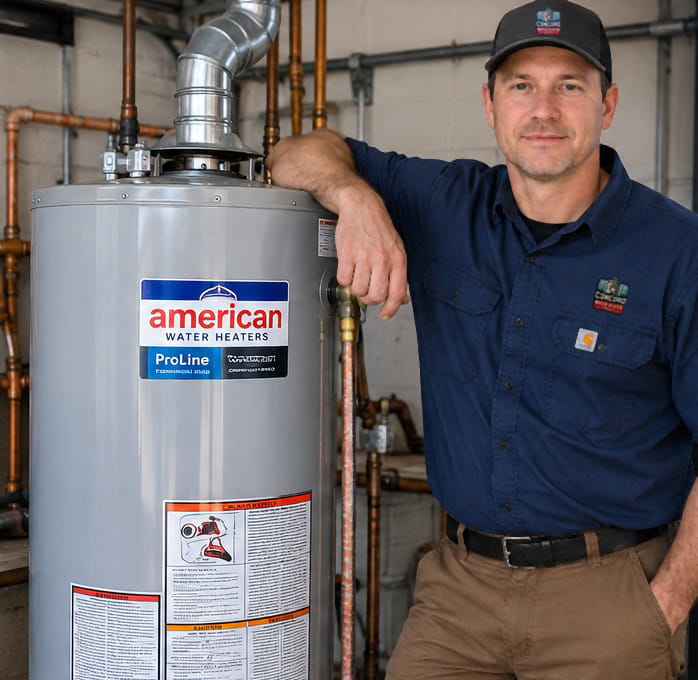
40-gallon gas water heater
- Commercial-grade American Water Heaters tank with Blue Diamond glass lining
- Tank, installation, labor, tax, and haul-away included
- Same-day service in most cases
- Licensed master plumber
Permit not included. Permits typically add $150 to $375, including the final inspection.
service
master plumber
included
Frequently asked questions
Do I need a permit to replace a water heater?
Yes. Cities in our area require a permit for water heater installation and replacement. A permit typically adds $150 to $375. The city permit fee is about $120, and the rest covers my time for the final inspection with the city.
Why does a permitted installation take longer?
A permit means extra visits. After the installation, the city sends an inspector for a final inspection, and I have to be there to meet them. The city gives a time window, and it can take anywhere from four hours to most of the day. I handle the scheduling and meet the inspector so you don't have to take the day off.
Does the ban apply to gas tankless water heaters?
Not yet. Most gas tankless water heaters are rated above 75,000 BTU, which puts them in a separate category with a later deadline than standard tank water heaters. If you want to stay on gas longer, a Navien tankless water heater is worth asking me about. A Navien with built-in recirculation typically runs $4,500 to $6,500 installed, and I install every recirculation model Navien makes.
What about 120-volt plug-in heat pump water heaters?
They plug into a regular outlet, so you skip the new 240-volt circuit. The problem is they don't reheat water fast enough for normal use. If the kids take back-to-back showers and use up the hot water, it can take about 3 hours to recover. I install them, but for most families I recommend something else.
Does the ban apply to gas stoves, dryers, or fireplaces?
No. The water heater rule does not cover gas stoves, ovens, dryers, or fireplaces.
Does it apply to gas furnaces?
Furnaces fall under a separate Air District rule, Rule 9-4, with its own timeline.
Is this a California law?
No. It is a Bay Area Air District rule, so it applies to the nine Bay Area counties. Other parts of California have their own rules.
Will my gas water heater be grandfathered?
Yes. Existing gas water heaters can keep operating. The rule only applies when you install a new one.